Is IMD Models & Talent Legit or a Scam? Contracts, Costs & Emails Explained
If you’ve been contacted by IMD Models & Talent, you’re not simply being evaluated as a model, but introduced into a system with a defined approach to generating revenue. The more important question is not whether IMD is legitimate, but how its business operates and who it is designed to profit from.
IMD Models & Talent, a Medford-based agency owned and operated by Teresa Pollman, has maintained a presence in the regional modeling and talent industry for decades. However, a review of its enrollment agreement, workshop materials, direct communications with prospective talent, and accounts from individuals familiar with its internal operations reveals a business model that differs significantly from how traditional modeling agencies operate.
Representation, But Only Through Paid Development
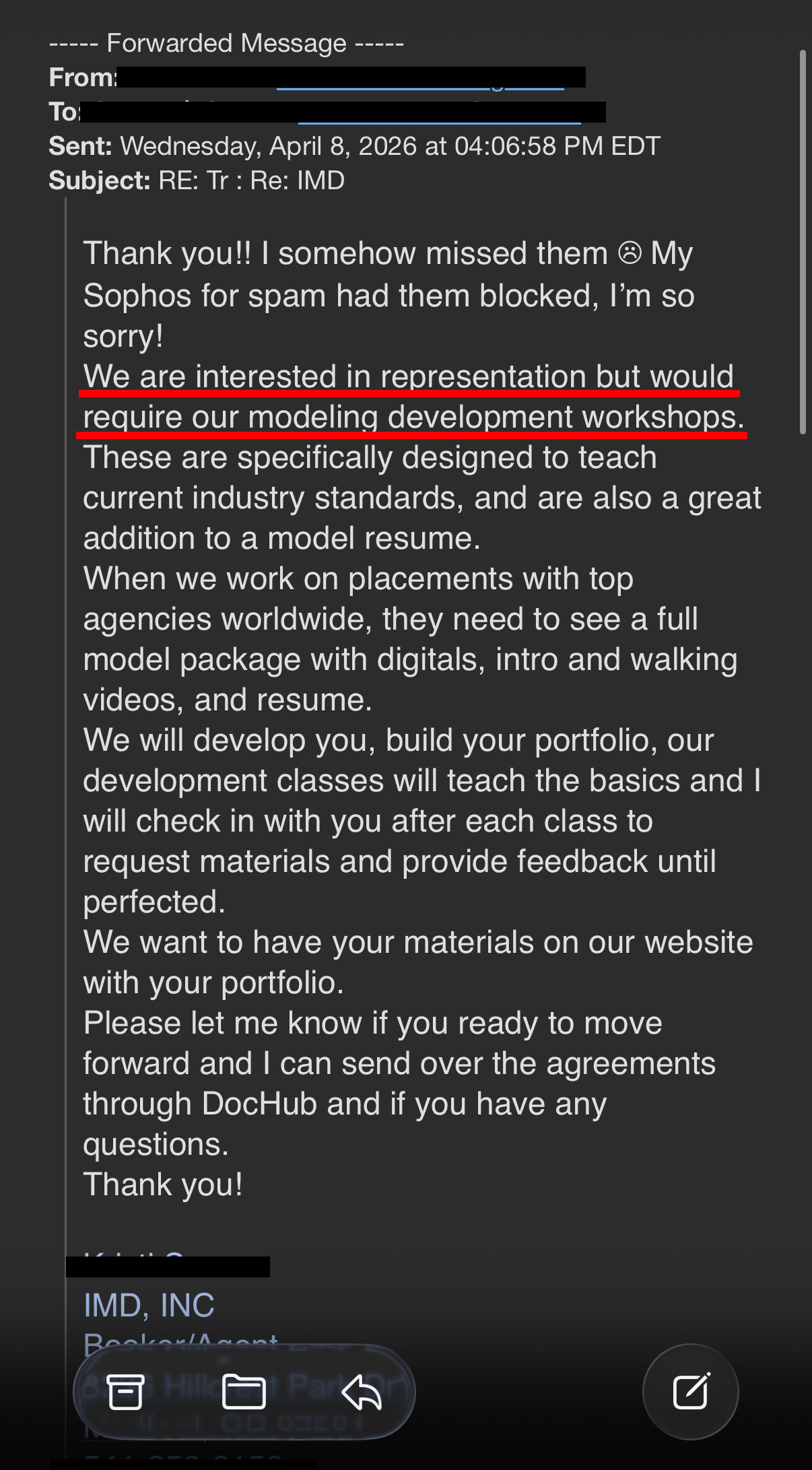
In one instance reviewed for this article, an aspiring model who had recently been in contact with IMD during the early stages of its onboarding process shared email correspondence after expressing uncertainty about how the opportunity was being presented. The individual requested that identifying details remain private.
In that email, the agency states:
“We are interested in representation but would require our modeling development workshops.”
This language is difficult to misread. The agency is not merely recommending outside development or suggesting optional preparation. It is connecting representation itself to participation in a paid in-house program. That distinction goes to the core of how the agency’s process operates.
For many aspiring models, the first interaction with IMD begins with encouragement. Prospective talent are often told they have potential and could be a strong fit. According to a former employee familiar with IMD’s operations, that validation was typically followed by a structured next step: placement into a paid pathway.
Rather than moving directly into representation, new talent are directed toward one of two primary options: a multi-month workshop program or a high-cost convention such as IMTA, the International Modeling & Talent Association. Participation in either is positioned as a way to move forward within the agency.
Contracts That Secure Payment, Not Outcomes
The agency’s enrollment agreement provides a clear framework for how this system operates.
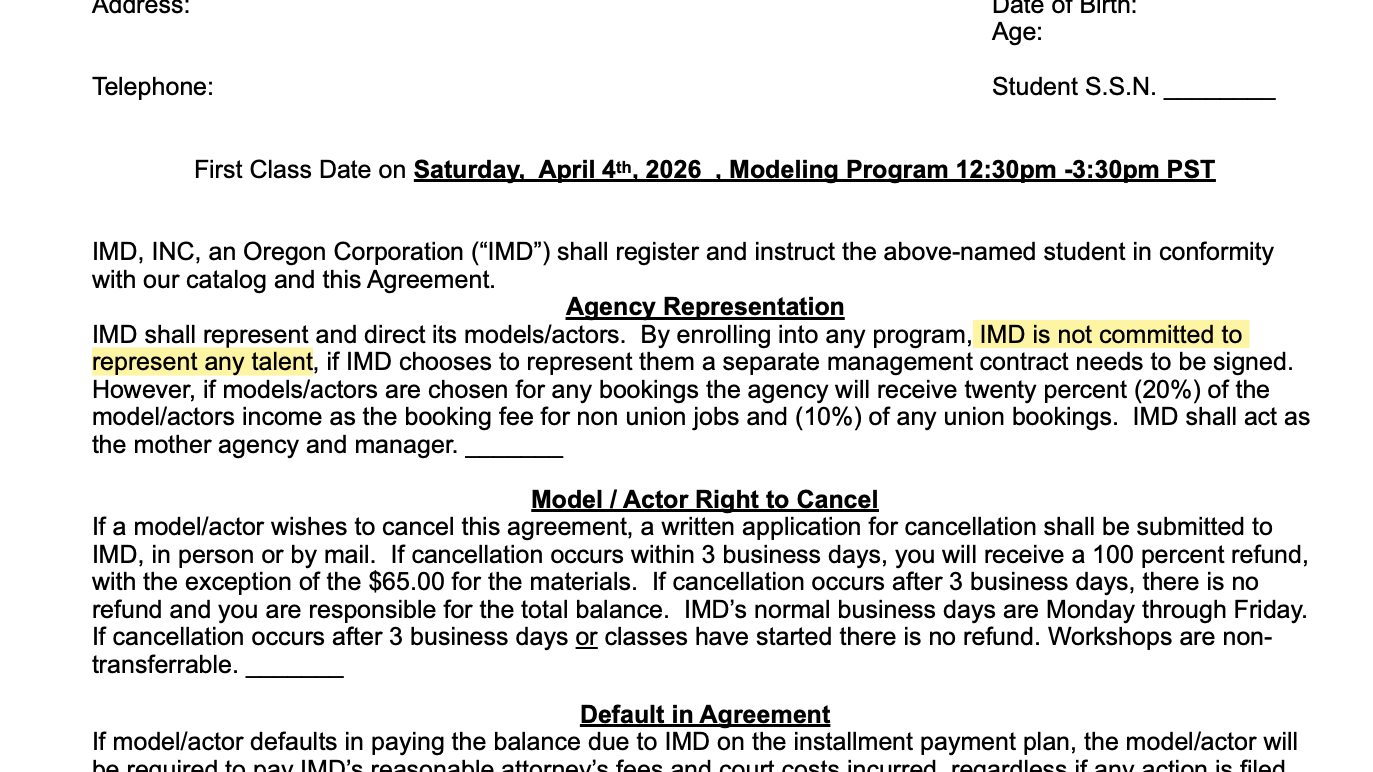
“By enrolling into any program, IMD is not committed to represent any talent…”
In practical terms, this means a model can complete the program, fulfill all financial obligations, and still not receive representation.
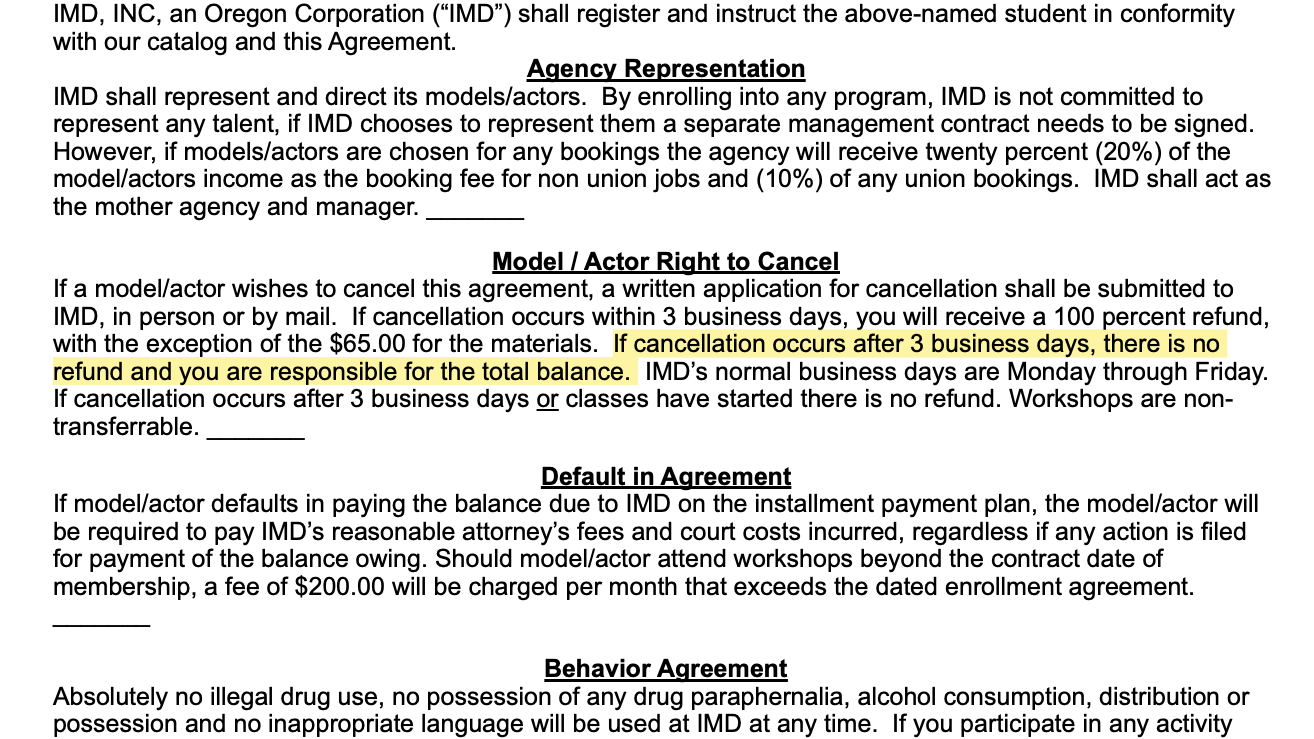
“If cancellation occurs after 3 business days, there is no refund…”
This structure places the financial risk entirely on the individual entering the program.
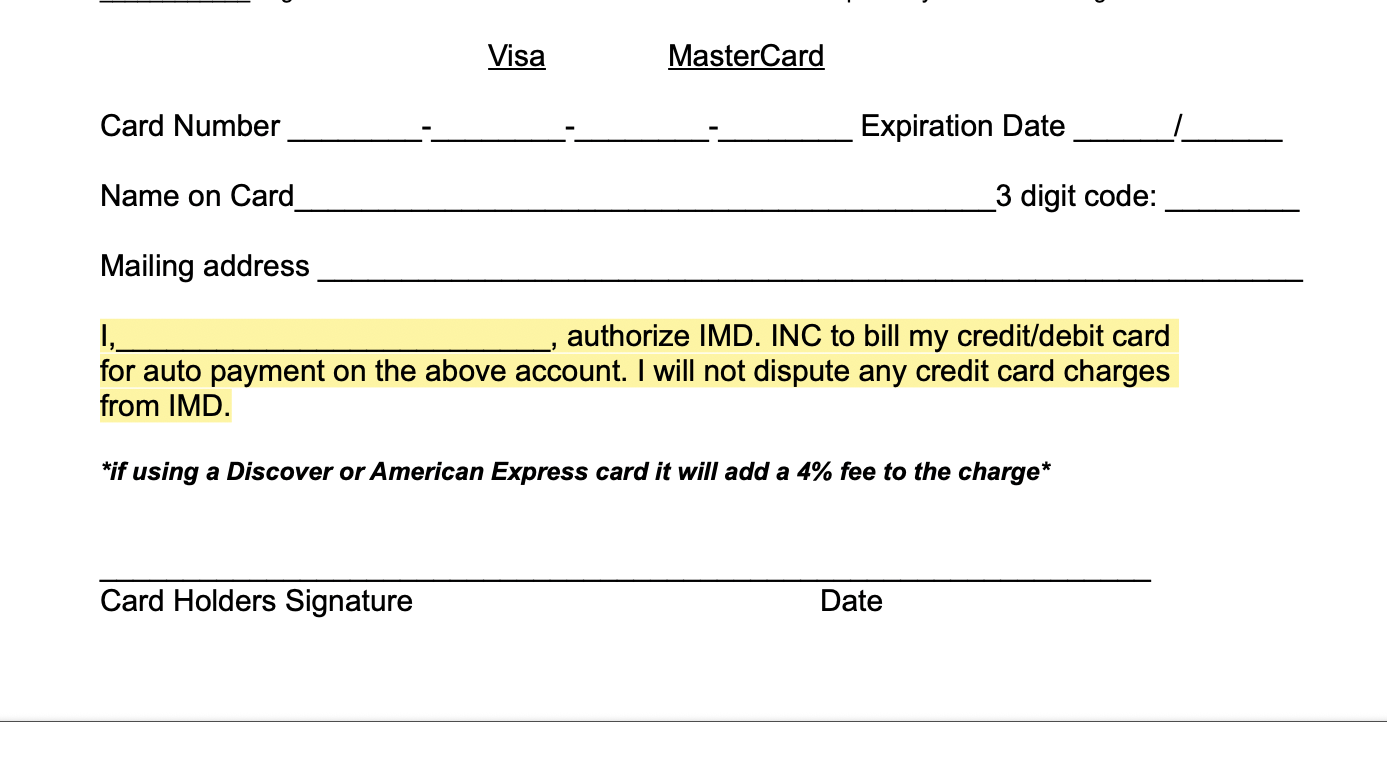
“I will not dispute any credit card charges from IMD…”
Taken together, these provisions ensure that financial commitment is secured early, while outcomes remain uncertain.
Multiple Revenue Paths for Every Applicant
Not every prospective model follows the same path, but most are directed into some form of paid program. Individuals unable to pursue higher-cost options such as IMTA are typically guided into workshops as an alternative way to continue within the system.
Workshops, which can cost over $1,000, are positioned as development. IMD’s own materials describe training sessions that include runway instruction, grooming, confidence building, and social media guidance. At the same time, the agency states that it is not a modeling or acting school.
The result is a structure that functions as a paid development system while formally distancing itself from that classification.
Internal expectations, according to a former employee, prioritized consistent intake of new talent. The focus was not limited to identifying a small number of high-potential individuals, but on maintaining a steady flow of participants entering paid programs.
In that environment, success was measured less by long-term placement and more by immediate enrollment. Compensation structures reinforced that priority, with incentives tied to participation in programs such as IMTA.
Some individuals do find success through the system. However, those outcomes appear limited relative to the number of participants entering it.
According to the former employee, a number of individuals completed programs and waited months without receiving placement opportunities. Despite this, the system does not depend on consistent placement outcomes to sustain itself.
Inside the Development System: Zoom Classes and Internal Training
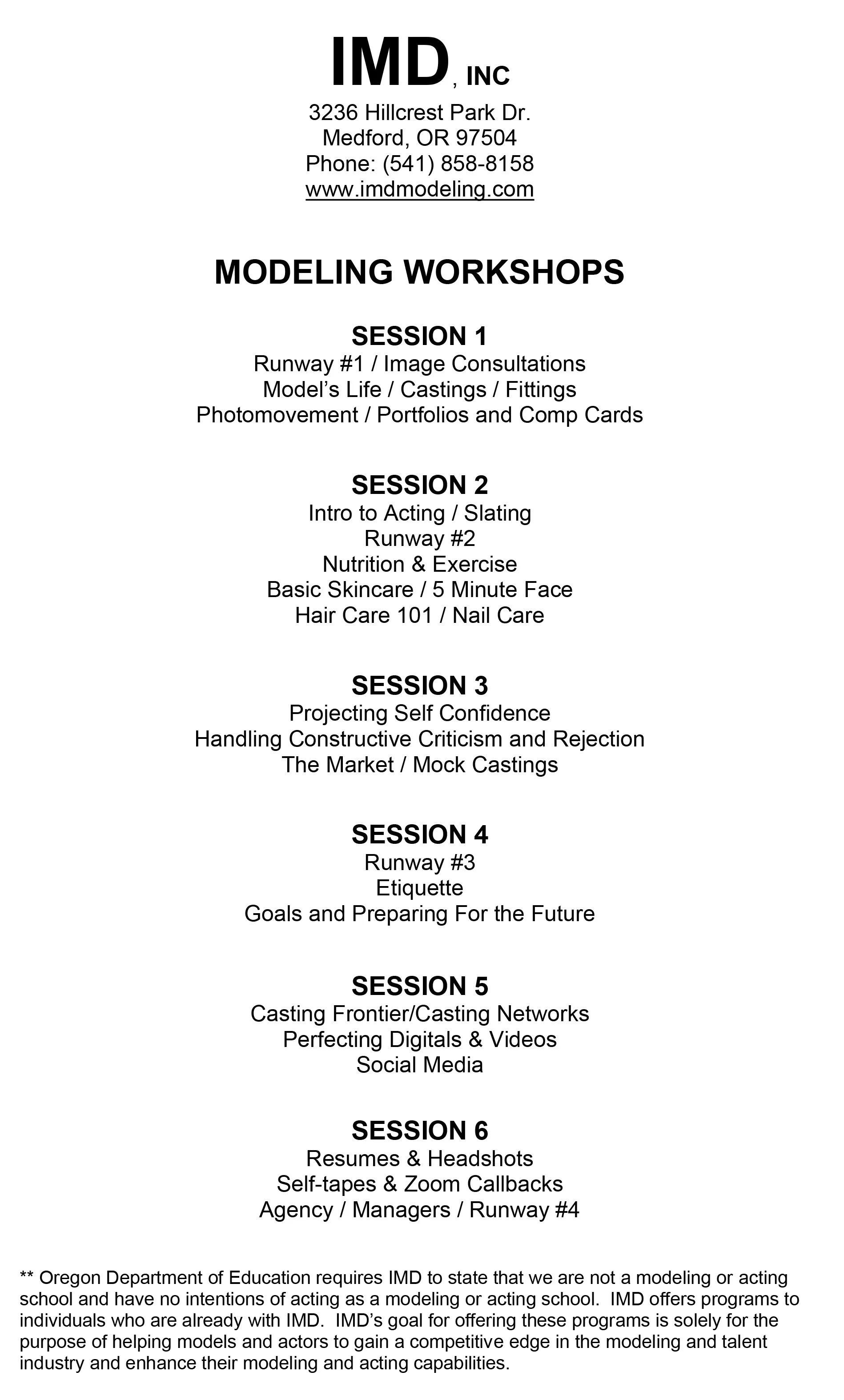
The development programs themselves are structured as multi-session classes, often conducted remotely. According to a former employee familiar with IMD’s operations, these sessions were frequently led not by independent instructors, but by models already affiliated with the agency.
“They were just other models that were teaching the classes,” the former employee said.
Those individuals were compensated for their participation, effectively positioning existing talent as instructors within the agency’s internal system. While peer-led environments are not uncommon in creative industries, the former employee raised concerns about the consistency and effectiveness of the instruction being provided.
“They’re not trained,” the former employee said, describing the instructors.
The classes themselves were conducted through virtual sessions, typically over Zoom, and covered topics such as runway, presentation, and confidence development. While these subjects are relevant to early-stage models, they are also widely accessible outside of paid programs.
Expanding the Funnel: Redirecting Talent Into Acting
The system is not limited to modeling alone. When individuals are not considered a strong fit for modeling, they are often redirected into acting programs rather than turned away.
According to the former employee, agents were guided to steer applicants in that direction.
“You should always tell them to consider acting.”
This approach allows individuals to remain within the system even if their original path changes.
According to the same account, interactions with prospective talent followed a defined structure. Conversations were guided toward identifying a pathway and moving individuals into a paid program.
“It was a script,” the former employee said.
Within that structure, the goal extended beyond evaluation to progression into the next stage of the system.
Once individuals entered the program, the financial structure created ongoing obligations. According to the former employee, there was pressure to ensure participants remained engaged and continued making payments.
“It was about keeping them in,” the former employee said.
Because payment plans were tied to enrollment, maintaining participation became part of the operational focus, reinforcing a system in which revenue was secured regardless of long-term outcomes.
Inside the Workplace: Pressure and Control
The structure described externally was reflected internally. The role was described as heavily sales-driven, with expectations centered around enrollment and performance.
Concerns about whether certain individuals should be encouraged to invest financially were raised but did not lead to changes in approach. Over time, this contributed to discomfort among staff familiar with the process. Despite internal concerns, the agency’s operational structure appears to have remained consistent under its current leadership.
Information reviewed for this article indicates that the agency does maintain a portion of its business that operates in a more traditional way. In select cases, models with existing experience, strong portfolios, or industry readiness may be taken on without being directed into paid programs.
In those instances, talent may be submitted directly for placements, similar to how a conventional mother agency would operate. However, that approach appears to play a smaller role within the overall structure.
Internally, the traditional model was understood to carry greater risk, as it depends on successfully placing talent and earning commission over time.
That distinction is significant. In a traditional agency model, revenue depends on bookings, which introduces uncertainty and requires long-term investment in development and relationships. By contrast, directing new talent into paid programs generates immediate, predictable income. That difference in predictability helps explain why the agency’s development pathways appear to function as the primary entry point for most applicants.
Referral Incentives Within the Talent Network
The structure extends beyond internal sales efforts. Information reviewed for this article indicates that existing talent may also be financially incentivized to refer new individuals into the agency’s system.
These referral payments, which can range from approximately $50 to $200, are tied to new participants entering the system and committing to programs, creating an additional pathway through which aspiring models may be introduced into the agency’s ecosystem.
While many working models may refer others in good faith, the presence of financial incentives introduces a secondary layer to the recruitment process, reinforcing a broader structure in which participation is directly tied to revenue generation.
A Business Model That Differs From Industry Standards
Within the broader modeling industry, agencies typically operate on commission, earning income only when their models book work. That structure aligns the agency’s success with the model’s success.
At IMD, the structure described by contracts and internal accounts appears different.
Revenue is generated through workshops, program enrollment, and convention pathways offered to aspiring talent before they begin working, rather than primarily through commissions on bookings.
This distinction affects not only how the agency earns money, but how opportunity is structured for those entering the system.
A Question of Alignment
IMD Models & Talent continues to operate as a legally recognized agency. However, the structure outlined in its contracts, combined with documented communications and internal accounts, raises broader questions about how opportunity is presented and how financial risk is distributed.
For many aspiring models, those distinctions may not be immediately clear, particularly for individuals entering the industry for the first time without a clear understanding of how representation typically works.
In an industry built on ambition, the difference between guidance and obligation can be difficult to recognize. The central question, however, is not simply whether an agency operates legally, but how its incentives are structured.
Is the agency positioned to succeed when its models succeed, or when individuals enter its system?